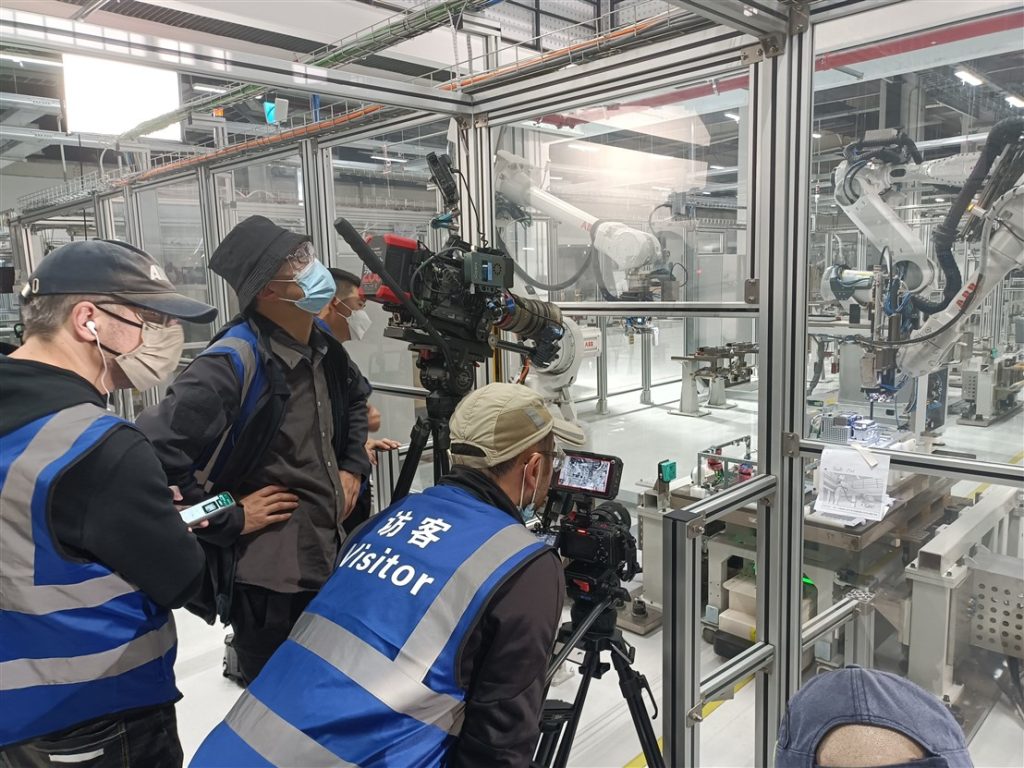
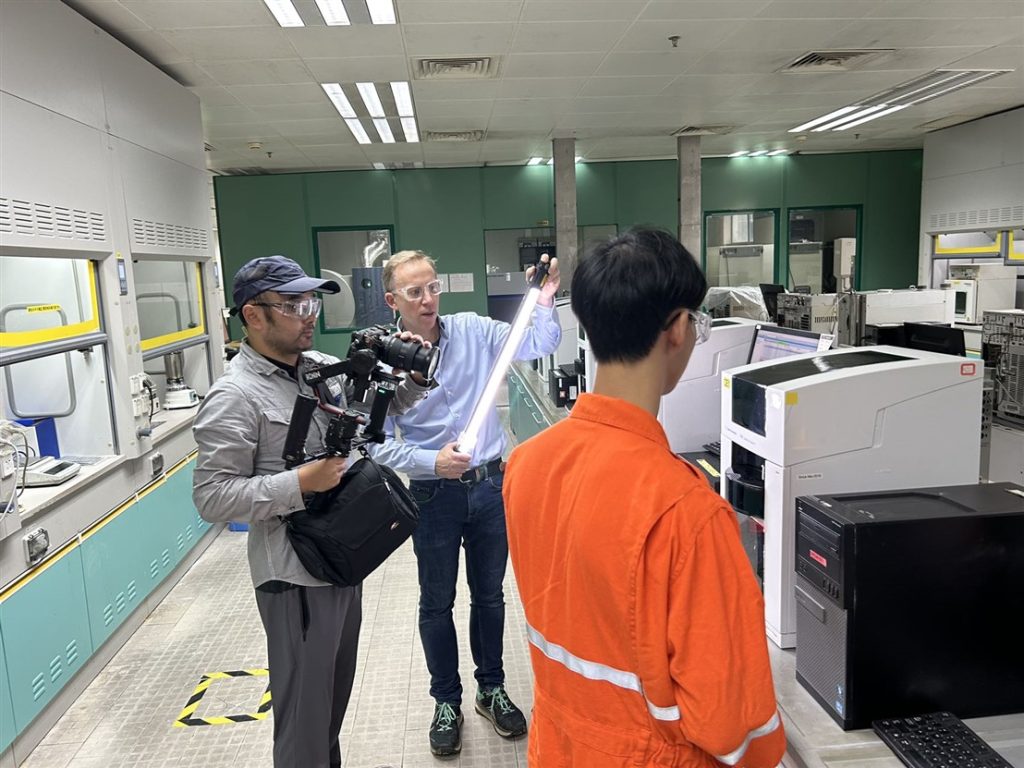
Factory video production needs a plan that works around the site’s operations. Before a camera enters a production area, the production team and factory representative need to agree access, safety, confidentiality and the processes that can actually be filmed. Shoot In China supports enquiries for factory tours, manufacturing stories and industrial interviews in Shanghai and surrounding production locations.
Start with the purpose of the film
A customer-facing factory overview, an investor story and an internal training film need different footage. Identify the audience, essential message, intended use, language versions and final formats before preparing the shot list.
For a manufacturing story, select the processes that prove the message: material preparation, a critical production stage, inspection, assembly, testing or dispatch. Avoid treating every machine as equally important. For technical or safety training, the factory’s authorised subject-matter reviewer should approve the procedure being demonstrated.
Prepare access, safety and confidentiality together
- Access: confirm crew registration, approved areas, escort requirements and filming windows with the site contact.
- Safety: ask the site to specify induction, PPE, restricted routes and rules for equipment placement. Plan camera positions with the responsible site personnel.
- Confidentiality: identify prototypes, drawings, screens, customer names, labels and processes that must stay out of frame.
- People: agree how employees and contributors will be informed and how any required permissions will be recorded.
- Operations: confirm what will be running on the proposed day and whether any demonstration needs separate arrangements.
The filming plan must follow site instructions. Do not block walkways, emergency routes or operating equipment to obtain a shot. Agree an alternative angle when a desired position cannot be used.
Build a process-based shot list
For each sequence, record the process, location, operating time, authorised contact, safety constraints and approved visual detail. A useful starting sequence is: approved exterior or entrance; a wide view of the working area; a medium view explaining the action; details showing the key step; a quality-control check; and the finished output.
Ask whether a process can be repeated. A continuous line or a one-off production stage may offer only a short window. Prioritise essential coverage and plan crew movement so filming does not depend on stopping normal production.
Keep interviews away from avoidable noise
Scout a separate interview space where possible, then assess machinery, ventilation, loading traffic, reflections and the distance from the filming floor. Record a test and listen to it before scheduling the contributor. An attractive background is not enough if speech cannot be recorded clearly.
For engineers or technical managers, share the interview topics and terminology beforehand. Decide whether the deliverable needs on-set interpretation, a timecoded translation, subtitles or all three. Confirm whether product and process names require client review.
A sample filming order
Illustrative plan: complete site induction and route confirmation; capture a time-sensitive production process; record the scheduled interview in a quieter room; film approved supporting details; check the essential coverage with the site contact; back up media and wrap. The order should follow the actual production line and contributor availability, not a fixed template. This is not a client case study.
Plan review and delivery before filming
Name the person who will review technical accuracy and confidential imagery. Agree when that review happens, how comments are consolidated and which changes belong within the editing scope. Include languages, aspect ratios, approximate film lengths, caption needs and the agreed number of review stages in the brief.
Ask for filming, travel, equipment, editing, graphics, translation and additional versions to be itemised. A factory tour, an interview film and a detailed training series should not be assumed to have the same workload.
Information to send for a factory filming enquiry
Share the site address, proposed dates, site contact, processes to show, operating windows, interviewees, languages, safety requirements and confidentiality restrictions. Include references for the finished style and explain whether you need footage only or an edited film.
For local management, see Shanghai bilingual producer support; for venue entry and movement arrangements, see filming logistics. A multi-city supplier assignment may also need China production fixing.
Discuss your shoot with Shoot In China
Send your brief, dates, location addresses and delivery requirements to [email protected]. Include the work already arranged so we can identify the support still needed.
Leave a Reply
You must be logged in to post a comment.